Swiss Consumers Tap Layered Voucher Systems to Stretch Loyalty Rewards Across Retail and Gaming Platforms
Devon Schulz · Aug 21, 2026
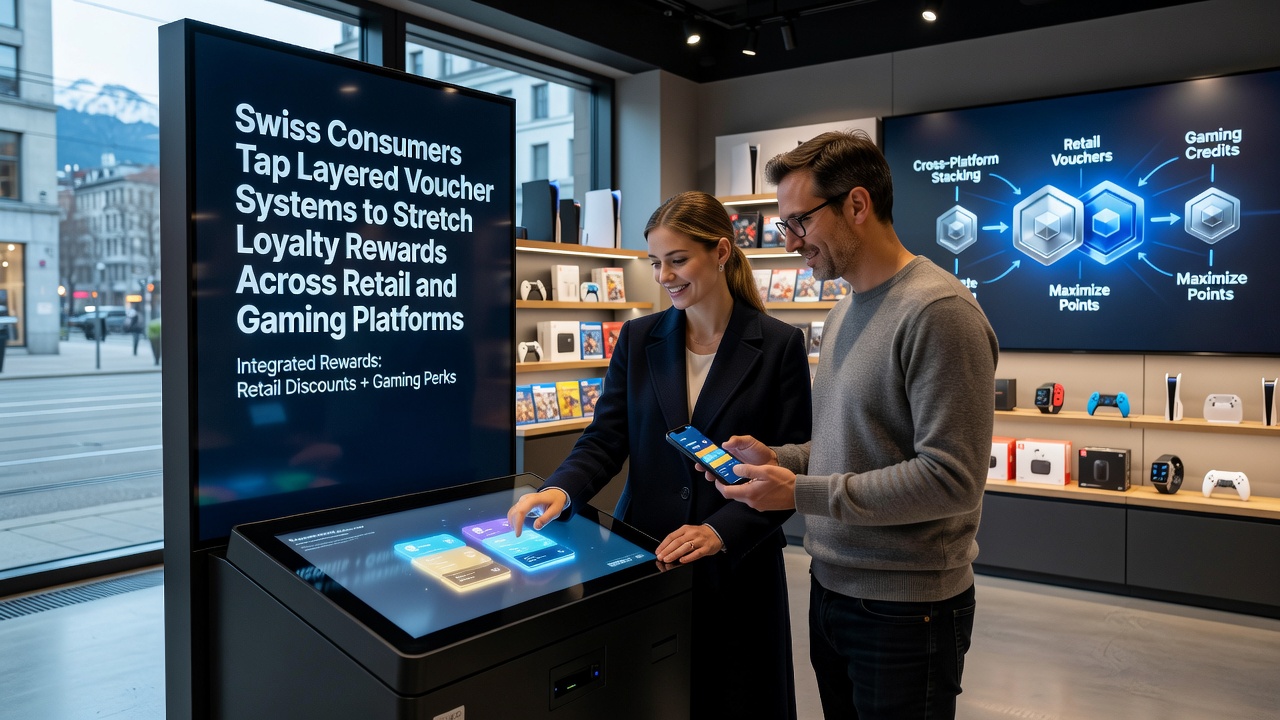
Swiss Consumers Tap Layered Voucher Systems to Stretch Loyalty Rewards Across Retail and Gaming Platforms
Swiss consumers have begun combining multiple voucher layers from retail chains and gaming platforms to extend the value of loyalty rewards, and this approach has gained traction as digital wallets and app integrations expand across the country. Data from market tracking firms shows that participation in combined retail-gaming reward programs rose steadily through 2025, with further acceleration noted in August 2026 when several major supermarket chains updated their apps to accept third-party gaming credits.
How Layered Voucher Systems Function
Layered voucher systems work by allowing users to stack credits earned from one sector onto purchases in another, and this stacking relies on standardized digital codes that retailers and game publishers exchange through secure APIs. Consumers collect base points from everyday grocery or clothing purchases, then convert those points into in-game currency or additional retail discounts through partnered platforms. Researchers at the University of St. Gallen documented that the average Swiss household now manages three separate loyalty apps, each feeding into a central digital wallet that tracks cross-sector redemptions.
Payment processors in Switzerland introduced updated protocols in early 2026 that reduced transaction friction between retail terminals and gaming servers, which in turn encouraged more merchants to join existing networks. One study released by the Swiss Retail Federation indicated that redemption rates for layered vouchers climbed 18 percent year-over-year, driven largely by younger demographics who already maintain active accounts on both supermarket and mobile game ecosystems.
Retail Integration Patterns
Retailers such as Migros and Coop have expanded their loyalty schemes to recognize gaming-derived credits, and these expansions allow shoppers to offset portions of their grocery bills with rewards earned from titles like FIFA or League of Legends. The process begins when a user links a gaming account to the retail app, after which accumulated in-game achievements translate into store-specific vouchers valid for 30 to 90 days. Observers note that this linkage reduces the effective cost of weekly shopping while simultaneously increasing playtime metrics reported by game publishers.
Examples of Cross-Platform Flows
Take one user who earns 500 loyalty coins through repeated grocery purchases at a chain that partners with an esports platform, then redeems those coins for a battle-pass upgrade inside a popular mobile title. The same user later converts surplus in-game items back into store credit, completing a closed loop that stretches the original retail spend across multiple weeks of entertainment. Figures released by the Federal Statistical Office show that households participating in at least two such loops reported a 7 percent reduction in combined entertainment and grocery outlays during the first half of 2026.
Gaming Platform Adoption
Gaming companies operating in the Swiss market have adjusted their reward structures to accept retail vouchers as direct deposits, and this adjustment creates additional revenue streams through partnership fees while boosting user retention. Platforms like Steam and local esports hubs now display redemption options that pull from supermarket loyalty balances, and the interface prompts appear after each qualifying retail transaction. Data compiled by the Interactive Software Federation of Europe reveals that Swiss accounts on major PC and console networks redeemed 2.4 million layered vouchers in the twelve months ending August 2026, up from 1.9 million the previous year.
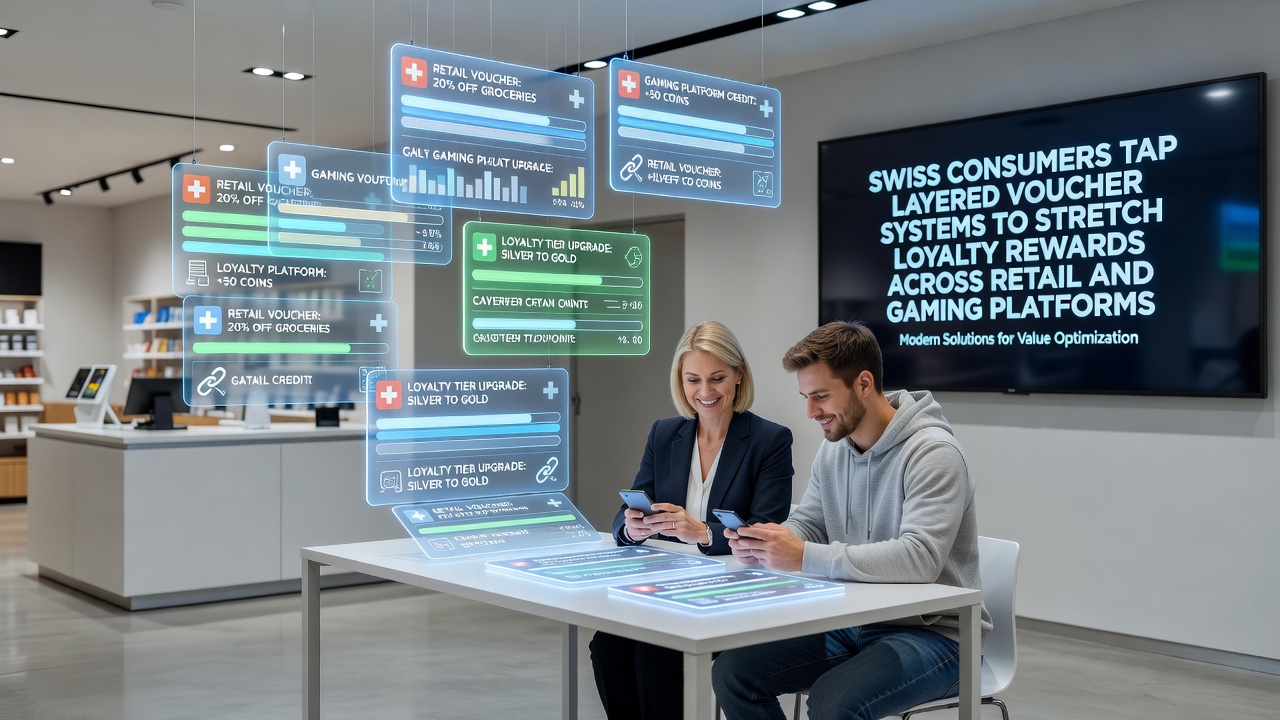
Security standards enforced by Swiss financial regulators require two-factor authentication for every cross-sector transfer, and these standards have kept fraud rates below 0.3 percent according to industry audits. Consumers who maintain verified profiles across both retail and gaming accounts experience near-instant credit reflection, whereas unverified accounts face a 24-hour processing window that many users find acceptable given the added value.
Regulatory Context and Market Data
Switzerland's consumer protection framework treats layered vouchers as hybrid financial instruments, and this classification subjects them to disclosure rules similar to those applied to prepaid cards. The State Secretariat for Economic Affairs published guidance in mid-2026 clarifying tax treatment for rewards that move between retail and digital entertainment, which removed previous uncertainty for both consumers and participating businesses. A separate report from the Canadian Institute for Health Information on digital reward behaviors provided comparative benchmarks showing Swiss adoption rates now exceed those observed in several provinces where similar stacking programs launched earlier.
Market analysts tracking August 2026 transaction volumes recorded that layered voucher usage peaked during back-to-school promotions, when families combined clothing discounts with gaming subscriptions to equip multiple household members. The pattern suggests seasonal spikes tied to calendar events rather than steady linear growth, and retailers have begun scheduling targeted campaigns around these windows.
Conclusion
Layered voucher systems continue to connect Swiss retail and gaming ecosystems through shared digital infrastructure, and the volume of cross-sector redemptions documented through 2026 indicates sustained consumer interest. Government guidance and industry standards together support the technical and legal conditions that allow these exchanges to operate at scale. As more platforms adopt compatible APIs and authentication methods, the number of households managing multi-source loyalty balances is expected to rise in line with the patterns already measured by federal and academic sources.